Metallic Epoxy vs Standard Epoxy — They Are Not the Same Material
Standard epoxy is specified for performance: chemical resistance in a warehouse, anti-slip grip in a commercial kitchen, dust suppression on an industrial floor. Its appearance is incidental — flat, solid colour, uniform. Metallic epoxy is specified for visual performance first. The mica mineral pigments suspended in the resin create a surface with real three-dimensional depth — tone, shimmer, and movement that shift as the light changes and as the viewer moves. This is not a printed pattern applied to the surface. It emerges from the chemistry of the pour itself, which is why no two installations ever look identical.

In the Saudi Arabian market specifically, metallic epoxy has become the preferred premium flooring system for residential villas, luxury showrooms, hotel lobbies, and high-end commercial spaces — environments where the surface is a design statement rather than purely a functional requirement. The system bonds directly to the existing substrate without demolition: tile, concrete, screed, or plaster. Demolition costs, skip hire, and the dust and disruption of breaking out an existing floor are eliminated entirely.
The durability of the finished surface is determined by what sits above the metallic layer: a UV-stable aliphatic topcoat that prevents yellowing and protects the resin against wear, chemical contact, and Saudi Arabia's intense thermal cycling. Without the correct aliphatic topcoat — rather than the cheaper aromatic alternative — metallic epoxy will amber under sustained natural light within months. Every installation we complete is sealed with the specification matched to its specific environment. Interior spaces, exterior terraces, pool surrounds, and commercial kitchens each require a different topcoat chemistry.
No Two Installations Look the Same
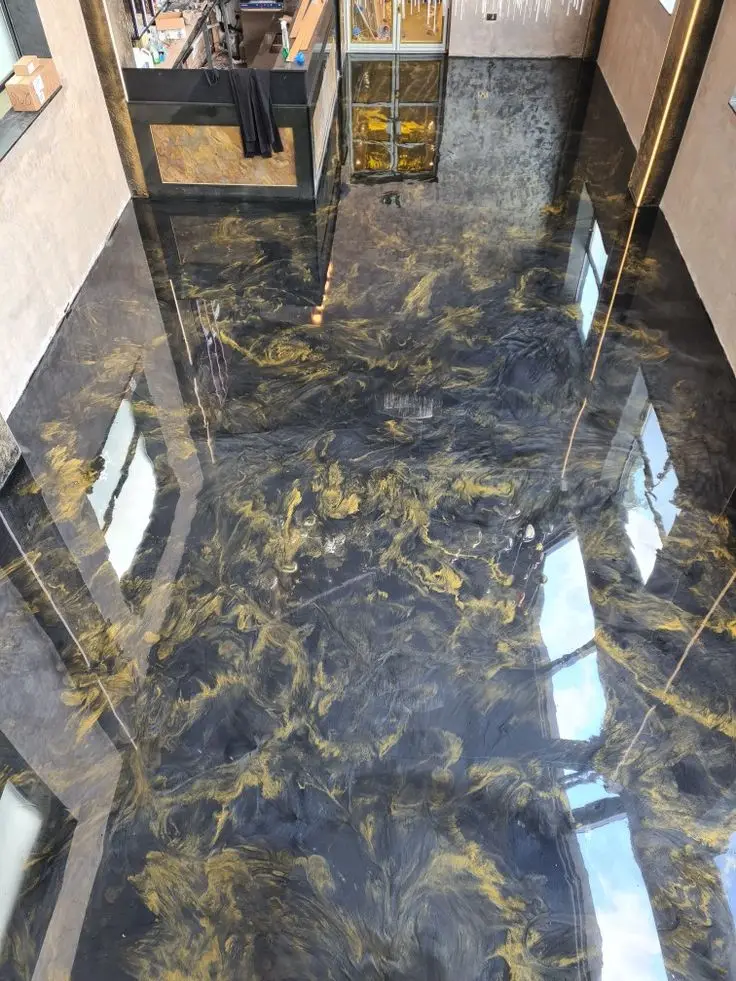
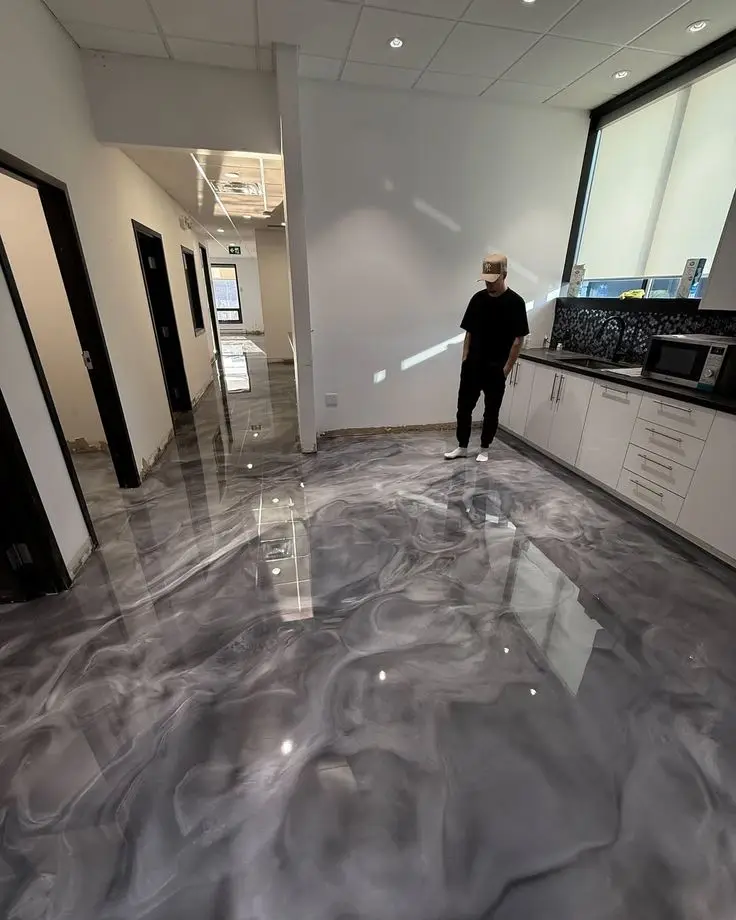
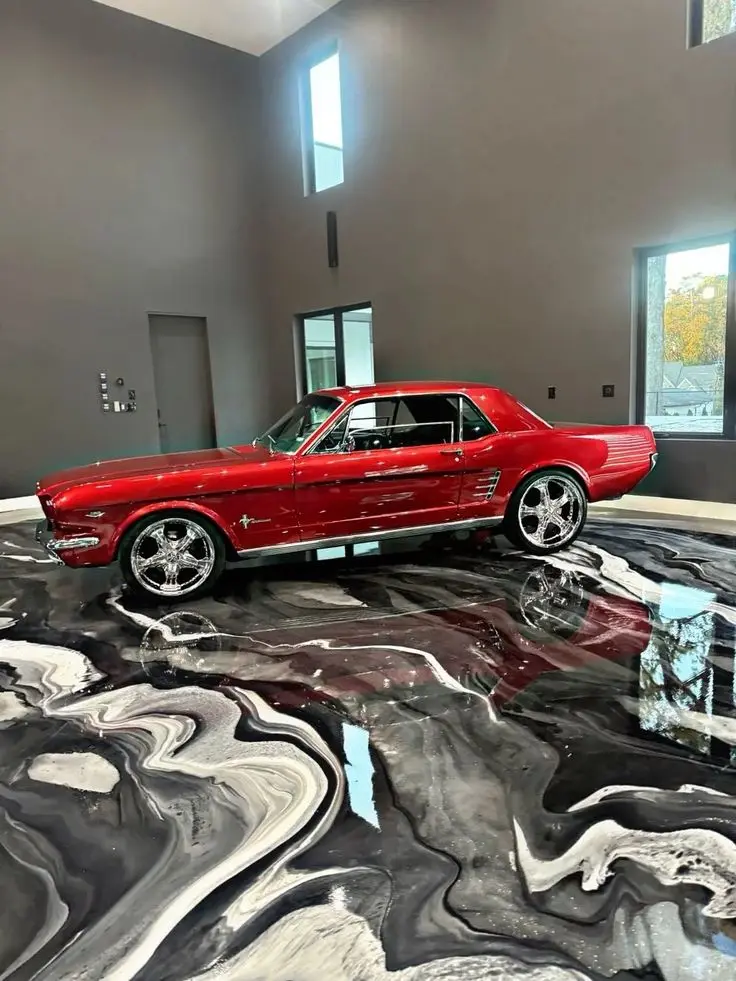
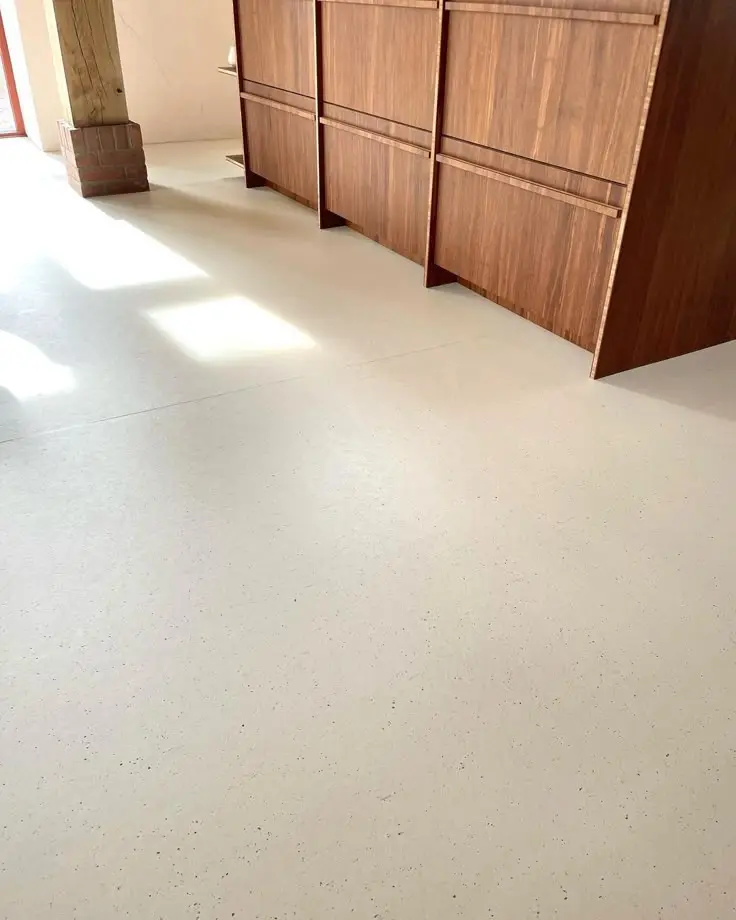
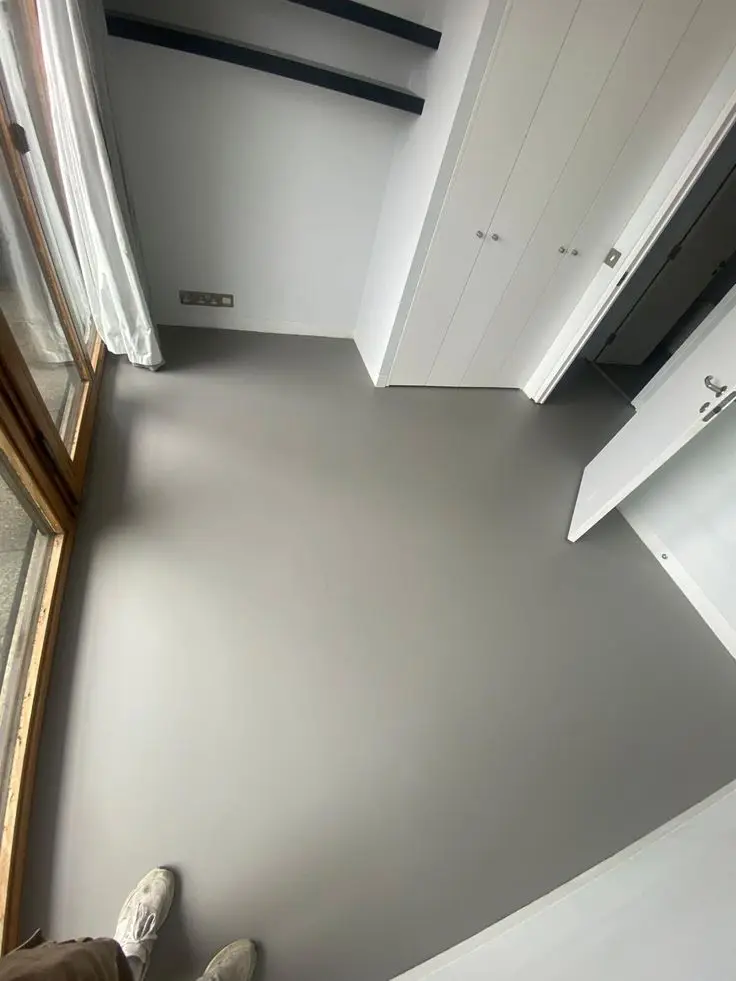
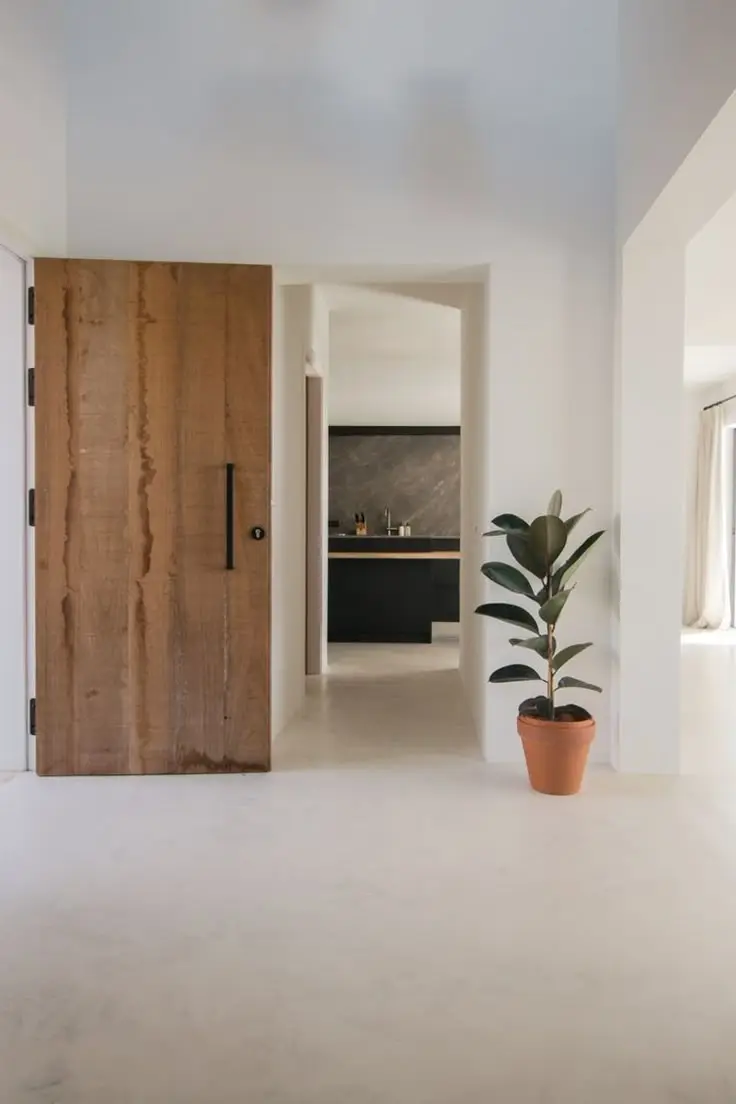
Every image below is a completed installation. The colours were selected by the client — but the final pattern emerged from the pour itself. That process cannot be staged, replicated, or predicted exactly. Each surface is unrepeatable.
Questions About the Material
No. Standard epoxy is a functional coating system — specified for durability, chemical resistance, and surface protection. Its appearance is a secondary consideration: flat, solid colour, no visual depth. Metallic epoxy is a completely different system. The base resin chemistry is related, but metallic epoxy uses micronized mica mineral pigments that suspend inside the resin and create a three-dimensional visual layer as the system cures. The result is not a coating that looks decorative — it is a surface system designed around visual performance from the ground up. The two systems serve entirely different purposes and are not interchangeable.
Colour selection is precise — you choose a palette from available pigment combinations, and the colours themselves are consistent and predictable. The pattern, however, is not. As the resin is poured, the metallic pigments move and settle in response to the specific conditions of that pour: the temperature of the substrate, the angle of the spread, the timing of the installation. These variables cannot be fully controlled, and they differ every time. This is not a limitation of the system — it is the defining property of the material. No other surface type produces a genuinely unique result on every installation.
Standard epoxy resins contain aromatic compounds that react to UV light and gradually amber — turning yellow or orange when exposed to natural sunlight. This is a well-documented failure mode in epoxy systems that use the wrong topcoat. Every metallic epoxy installation we complete is sealed under a UV-stable aliphatic topcoat, which breaks the UV reaction pathway and prevents yellowing entirely. A correctly specified metallic epoxy surface will not change colour in normal natural light conditions over its service life.
The resin substrate — the metallic layer itself — is chemically inert once cured and does not degrade under normal conditions. What determines the practical service life of the installation is the topcoat: the protective sealer layer above the resin. In interior environments with light to moderate traffic, a correctly specified topcoat will remain fully protective for eight to twelve years before a maintenance recoat is warranted. High-traffic commercial environments and outdoor applications require earlier recoat cycles. The metallic layer beneath does not need replacement — only the topcoat is maintained.
Because metallic epoxy is fully seamless and non-porous, there are no grout lines, no joints, and no recesses where dirt accumulates. Daily maintenance is straightforward: remove loose debris, then clean with a damp mop and a pH-neutral cleaning product. Acidic cleaners, bleach-based products, and abrasive materials all attack the polyurethane topcoat — using any of these shortens the service life of the protective layer and should be avoided. There is no specialist maintenance product required. The surface does not need polishing, waxing, or resealing as part of routine care.
Not Sure Where to Start?
Share a photo of the surface and describe the environment — whether it is a floor, a wall, a countertop, or an outdoor space. We will confirm whether metallic epoxy is the right specification for that surface, identify the preparation the substrate requires, and give you a project estimate before any site visit is needed.