
Technical Specifications
Stairs absorb more impact per square metre than any other surface in a building. The microcement system we specify for staircase applications is formulated and tested at a higher performance level than our floor or wall products.
| Property | Value |
|---|---|
| Slip Resistance — Interior | R10 |
| Slip Resistance — Wet / Outdoor | R11 |
| Total Applied Thickness | 2 – 3 mm |
| Compressive Strength | ≥ 40 MPa |
| Flexural Strength | ≥ 9 MPa |
| Bond Strength to Substrate | > 1.5 N/mm² |
| Impact Resistance | Class III |
| Abrasion Resistance | Class A (≤ 3 cm³ / 50 cm²) |
| Weight Added to Structure | < 3 kg / m² |
| Nosing Reinforcement | Alkali-resistant fibreglass mesh |
| Sealer | Two-coat polyurethane — Matte or Satin |
| Safe for Light Traffic | 72 hours after final coat |
| Full Cure | 28 days |
R10 is standard on all interior stair applications. R11 anti-slip aggregate is incorporated into the sealer at no extra cost for outdoor stairs, wet-exposed landings, or homes with elderly residents or young children.
Completed Staircase Projects
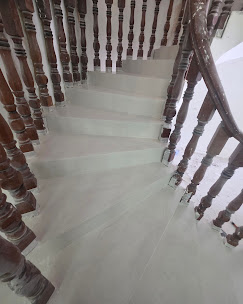
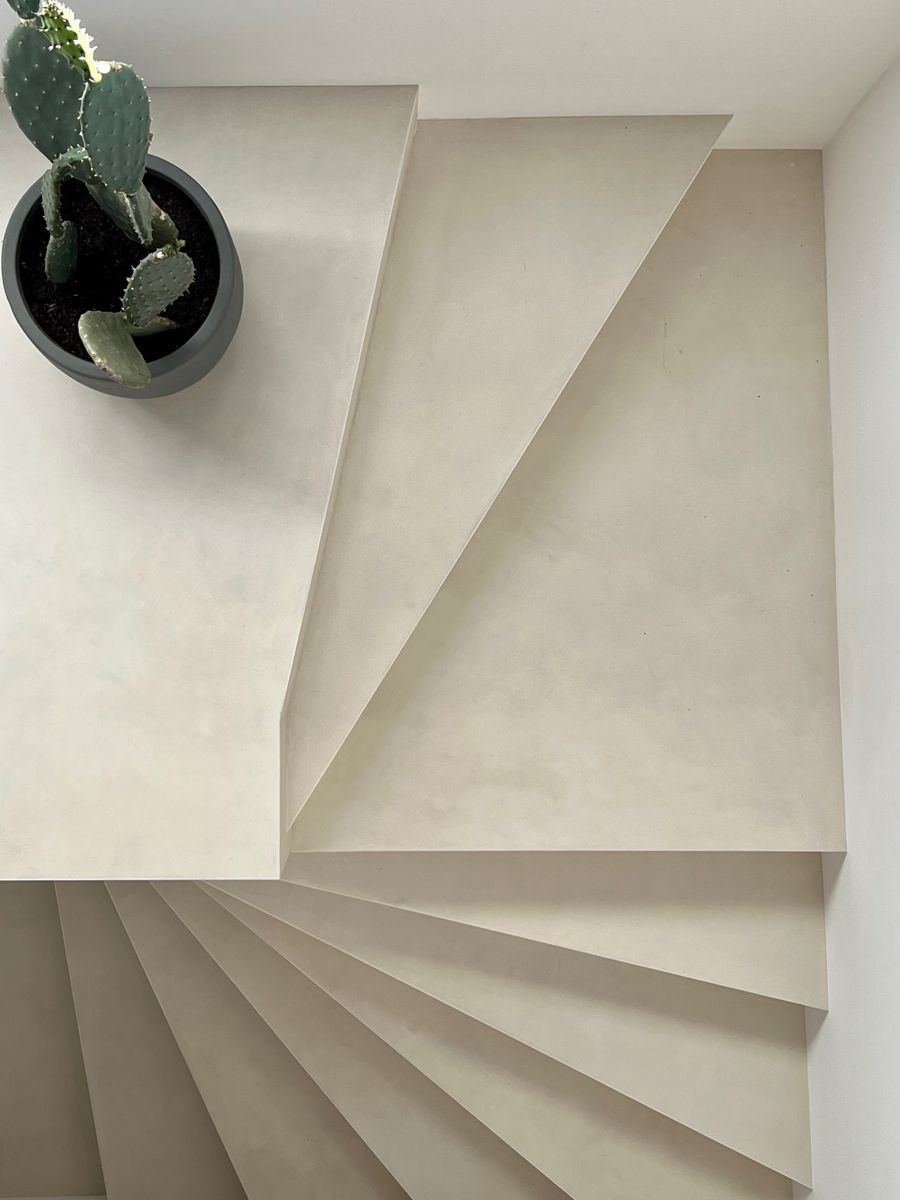
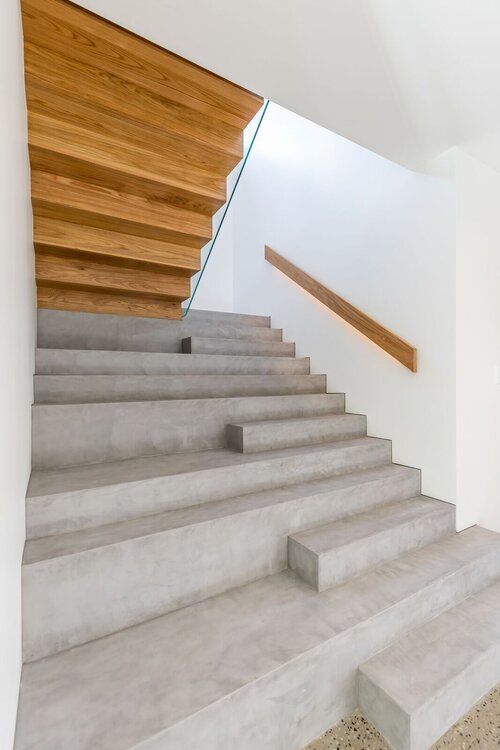
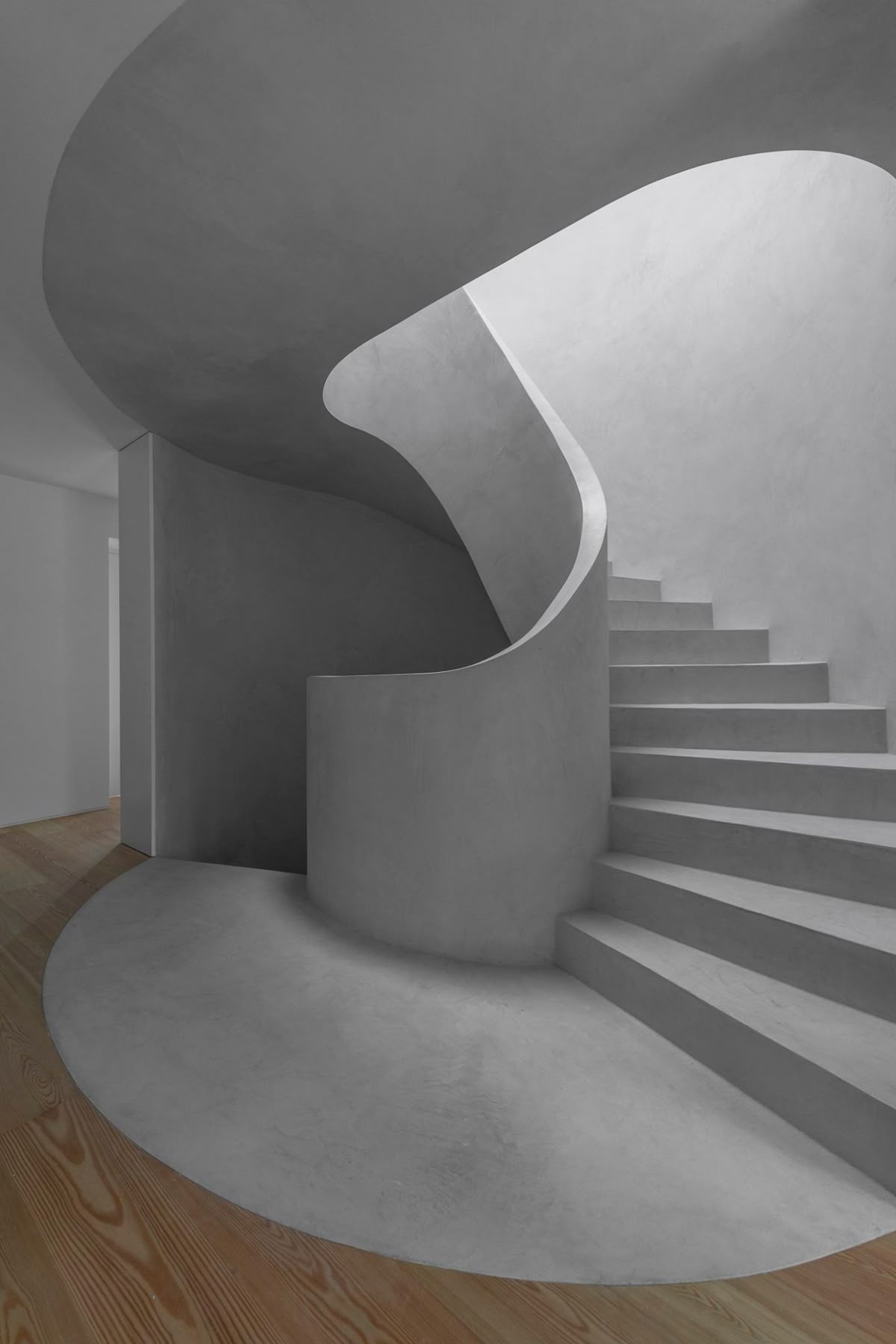
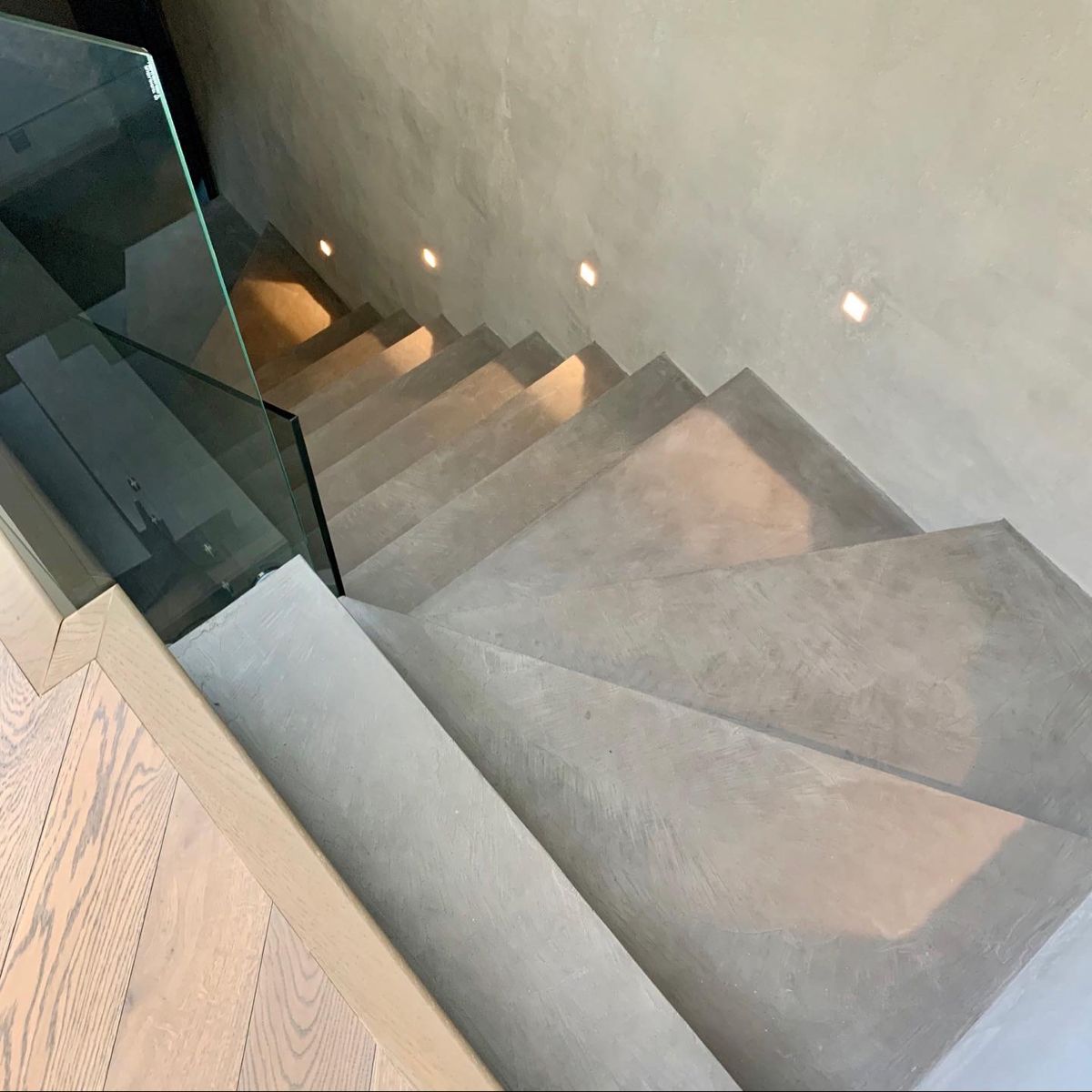
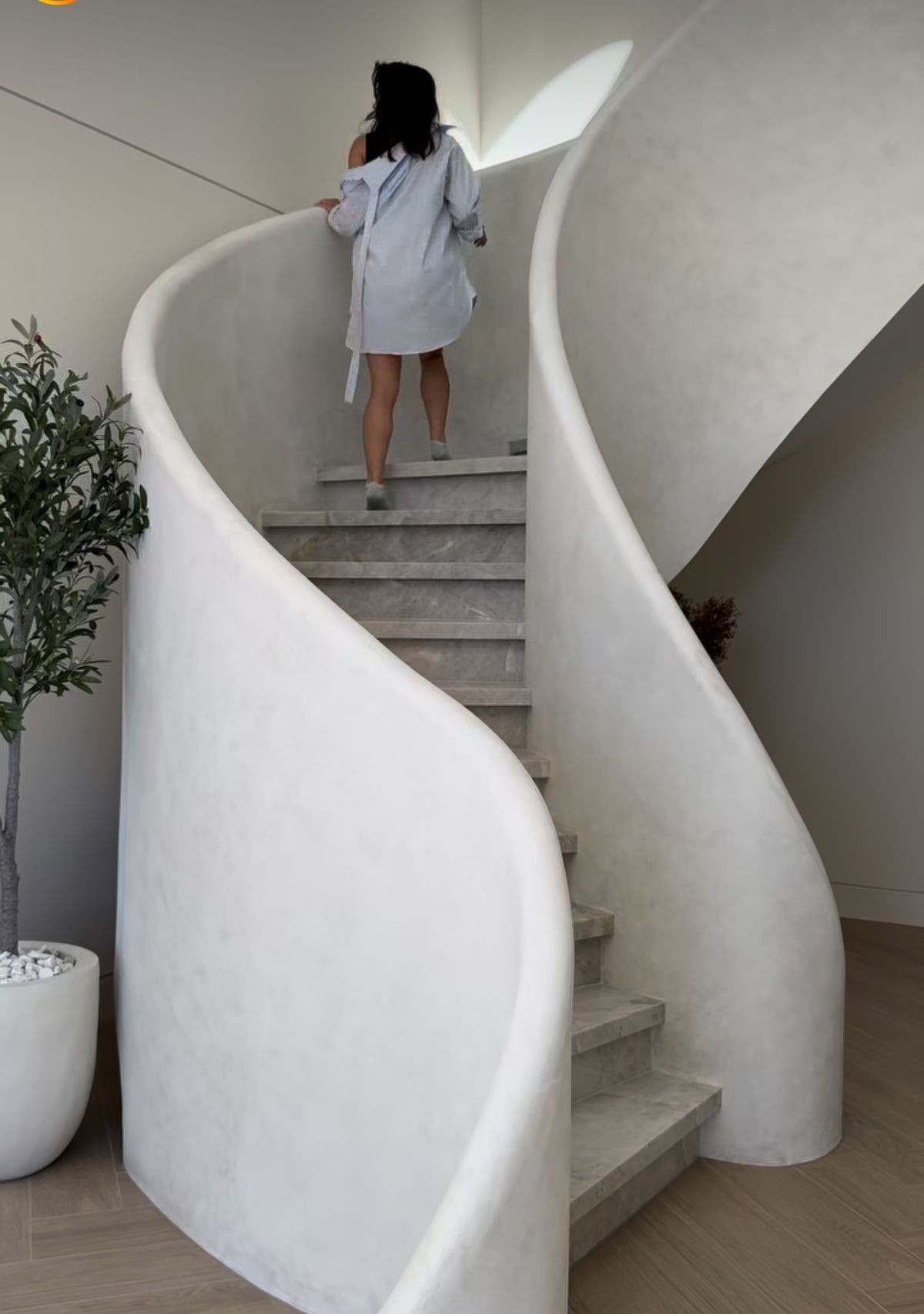
Every project shown here was installed over existing marble, ceramic, or concrete with no demolition. Finishes range from warm residential tones to deep architectural greys.
How Microcement Is Applied to Stairs
Two things cause most microcement stair failures: inadequate surface preparation and skipping nosing reinforcement. Every step in our process is designed to eliminate both.
Structural Assessment
Every step is checked for movement, flex, and surface condition before any material is applied. Microcement is rigid once cured — any movement in the staircase structure will crack the coating from below, regardless of the product quality used. Structural issues are resolved at this stage. This assessment is what determines whether the project proceeds and what method is used.
Day 1 — morning
Mechanical Preparation of the Existing Surface
Sealers, wax, adhesive residue, and contamination are removed from every tread and riser using angle grinders and vacuum-extraction sanders. The surface is abraded to a consistent mechanical key. Marble — the most common stair substrate we encounter in Saudi Arabia — is a dense, low-porosity stone. It must be physically keyed, not simply cleaned, for primer adhesion to hold.
Day 1
Crack Filling & Nosing Edge Profiling
Existing cracks and damaged nosing edges are repaired and re-shaped using repair mortar. Each nosing is profiled to a 5–10 mm radius — the geometry needed to support the reinforcement mesh in the next step. A sharp or irregular nosing edge cannot hold the mesh correctly, and is the most common reason staircase edges fail on poorly executed jobs.
Day 1 — afternoon
Substrate-Matched Primer
A penetrating primer is applied across all treads and risers and allowed to reach tack before proceeding. The primer chemistry is selected for the specific substrate — marble, ceramic, porcelain, and concrete each require different formulations. Porous substrates receive two coats. Nothing is applied over wet or uncured primer.
Day 1 — afternoon
Fibreglass Mesh at Every Nosing Edge
An alkali-resistant fibreglass mesh strip is pressed into the base coat at each stair nosing, spanning the tread-to-riser joint. The nosing is where every footstep makes first contact — it takes the highest concentrated impact on the entire staircase. This reinforcement distributes that load across the surface and prevents delamination at the edge over years of use. Most applicators skip this step to save time. We do not.
Day 2 — morning
Base Coat Across All Treads & Risers
The first microcement layer is applied at 1–1.5 mm using a stainless-steel trowel. Riser faces — the vertical surfaces between steps — require a modified application technique to prevent the material from moving before it sets. Once dry, the base coat is sanded flat across all surfaces in preparation for the finish coat.
Day 2
Finish Coat — Colour & Surface Character
The finish coat is applied at 1–1.5 mm in the agreed colour and texture. The final visual character of the staircase is determined here — tone, depth, and how much trowel texture is left open. A more open texture increases slip resistance naturally; a tighter pass produces a smoother, more refined look. The finish is confirmed with the client before this coat begins.
Day 3
Anti-Slip Sealing — Two Coats
Two coats of polyurethane sealer are applied. The first coat can incorporate a fine anti-slip aggregate applied while wet, achieving a certified R10 or R11 surface rating without changing the visual appearance. The sealer is the barrier against moisture, foot-traffic wear, and staining. For residential stairs, a light re-coat every 3–5 years keeps the surface at full performance.
Day 3 – 4
Designed for the Most Demanding Surface in Any Building
Certified Slip Resistance — No Extra Fittings Required
R10 slip resistance is built into every stair application as standard, certified to DIN 51130. The rating comes from the sealer system — not from grip tape, nosing strips, or surface inserts that age poorly and collect dust.
Bonds Directly Over Marble Without Demolition
Marble staircases are common across Saudi Arabia. Removing them is expensive and disruptive — and usually unnecessary. Microcement bonds to marble at 2–3 mm total thickness, giving a completely new surface without touching the structure underneath.
Reinforced Nosing Edges That Stay Intact
The leading edge of each step is reinforced with fibreglass mesh embedded into the base coat. This edge absorbs the full impact of every footstep — the reinforcement prevents it from chipping or delaminating, even after years of continuous use.
One Continuous Surface — No Grout, No Joints
Grout lines on tiled stairs collect dirt, discolour over time, and are difficult to clean properly. Microcement covers every tread and riser as a single uninterrupted surface — nothing to trap dust, hold staining, or deteriorate between the tiles.
Handles Point-Load Impact on Every Step
Heel contact at a stair nosing concentrates force into a very small area repeatedly, thousands of times per year. At ≥ 40 MPa compressive strength and Class III impact resistance, this system is rated to handle that loading without surface damage.
Stable Through Saudi Arabia's Temperature Extremes
Surfaces in Saudi Arabia move through significant thermal cycles — air-conditioned interiors to outdoor heat. Microcement's low expansion coefficient and the polyurethane sealer system handle this movement without cracking, bubbling, or surface separation.
Colours & Finishes
Microcement is tinted to order. The six tones below are the most specified for stair applications across Saudi residential and commercial projects. Any RAL or NCS reference can be matched. Matte is standard on stairs; satin is available on request.
Ash Grey — Matte
The most requested tone for residential staircases. A neutral warm grey with a matte anti-slip sealer as standard.
Warm White — Matte
Lightens enclosed stairwells and pairs cleanly with white walls or light timber. A calm, consistent surface across the full flight.
Natural Concrete
The visual language of raw concrete without any structural work. A cooler neutral with visible trowel texture in the surface.
Charcoal — Structured
A deep, anchoring tone. Especially effective on floating or open-riser staircases where the underside of each step is visible.
Sandstone Beige
A warm earthy tone that sits comfortably alongside natural materials — timber, stone, woven textiles — found commonly in Saudi residential interiors.
Deep Anthracite
Near-black with a fine trowel texture. Specified most often for contemporary architectural schemes and commercial staircases.
What Clients Say
“My mother is in her seventies and the old tiled stairs were a genuine safety concern — the grout near the bottom landing had worn smooth and she had slipped once already. The team applied the microcement with the R11 anti-slip finish and I tested it myself both wet and dry before she used it. Fourteen months later, not a single mark or crack. It has made a real practical difference to how she moves around the house.”
“We renovated the entire ground floor but the staircase still felt out of place. The original marble was structurally fine — tearing it out seemed unnecessary and expensive. The microcement went straight over it and now the whole space reads as one material. I did not think that kind of change was possible without demolition. Very pleased with how it came together.”
“I work in fit-out and specify finishes regularly — floors and walls mainly. For staircases specifically, the execution at the nosing edge is what separates a durable result from one that fails. This team uses fibreglass mesh reinforcement at every nosing, which most applicators skip. Four stars rather than five only because the start date moved by a week. The result itself was exactly right and I will use them again.”
“Honestly did not expect this much of a difference. The stairs were badly dated — chipped tile, grout I had re-done twice that still looked terrible within months. Now they look like they belong in an architecture project. The tone we chose shifts slightly with the light at different times of day in a way I was not expecting. Very glad we went for it.”
Questions About Microcement Stairs
No — slip resistance is specified into every stair application, not treated as optional. We apply an R10-certified sealer as standard, tested to DIN 51130. For households with elderly residents or young children, R11 anti-slip aggregate is added to the sealer at no extra charge. The surface looks and feels like normal finished microcement — not like grip tape or anti-slip coating — while meeting the same slip resistance standard used on commercial step surfaces.
Yes, in most cases. Marble staircases are very common across homes in Saudi Arabia, and microcement bonds directly to marble at 2–3 mm total thickness provided the substrate is structurally sound and properly prepared. We conduct an adhesion test before any work begins. Going over the existing marble avoids demolition entirely — which on a staircase means no noise, no structural disruption, and significantly lower cost.
The full system — primer, base coat, finish coat, and sealer — sits at 2–3 mm total depth. This falls within the tolerance threshold for residential building regulations and does not meaningfully affect step height. If your staircase has flush-fitted skirting boards, door thresholds at landing level, or fixed stair rods, these are identified and addressed during the assessment stage before installation begins.
Most residential staircases of 10–16 steps are completed in 3 to 4 days. This includes mechanical preparation, primer, nosing reinforcement, base coat, finish coat, and the two-coat sealer system — with all mandatory drying times between coats built into the schedule. The staircase will be out of use during this period. We agree the start date and access plan around your household routine before confirming the job.
Light foot traffic is safe 72 hours after the final coat. For the next 7 days, avoid heavy loads, dragging objects, and abrasive cleaners while the sealer completes its chemical cure. Full hardness and abrasion resistance are reached at 28 days, after which the surface handles normal daily use without restriction. Written aftercare instructions are left on site before we finish.
The nosing — the leading edge of each step — is where every footstep makes first contact. It takes more concentrated impact than any other point on the staircase, and it is where most microcement stair failures begin. Our process embeds an alkali-resistant fibreglass mesh into the base coat at every nosing, spanning the tread-to-riser joint. This distributes the impact loading and prevents the edge from delaminating or chipping. It adds time to the installation, but it is what keeps the staircase intact after years of daily use rather than beginning to fail within two or three.
Yes, using a modified system with enhanced UV stability and a penetrating waterproof sealer. We specify R11 as the minimum slip resistance for any outdoor stair surface. In Saudi Arabia's climate, outdoor stairs in full sun exposure will need a sealer re-coat every 2–3 years to maintain full performance. Stairs that are shaded or covered can typically go 3–5 years between re-coats. Exposure conditions are assessed at the survey stage and factored into the specification.
Ready to Renovate Your Stairs?
Send us a photo of your existing staircase and we will confirm substrate compatibility, recommend the right finish and slip-resistance rating, and provide a fixed price — usually within 24 hours. We work across Saudi Arabia.
