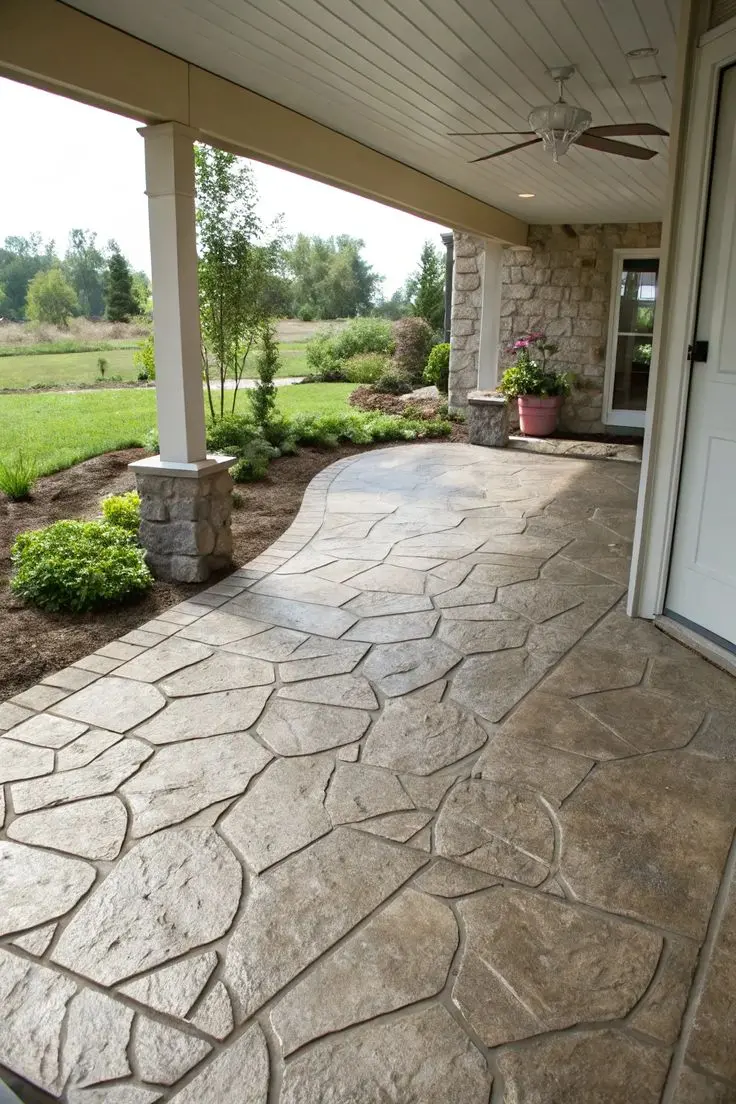
Why Patio Surfaces Need Their Own Specification
A patio is a living surface. People sit on it for hours, children play across it, furniture stays in place permanently, and food and drink spill on it regularly. These conditions are fundamentally different from a driveway built for vehicles or a walkway designed for passing through. The engineering has to account for barefoot comfort, furniture loading, stain resistance, and extended human contact with the surface throughout Saudi Arabia's intense summers.
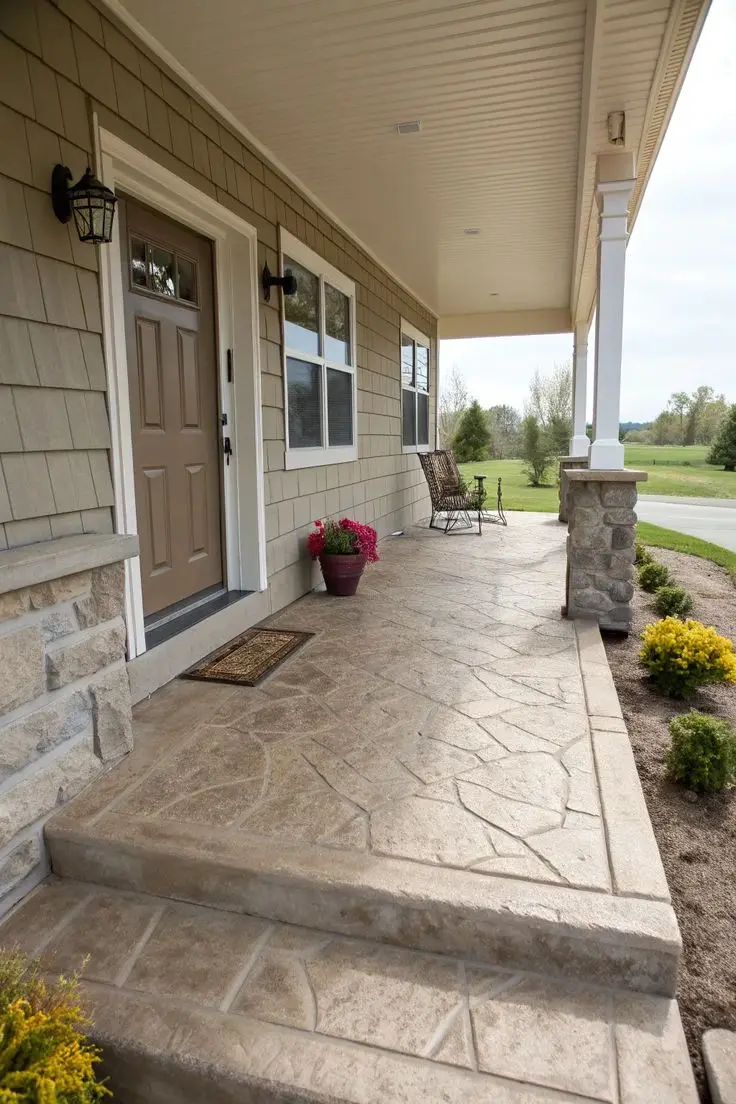
Heat management is the defining challenge. An unshaded patio surface in Saudi Arabia can exceed 70°C in direct midday sun. The practical solution combines two layers: lighter integral concrete colors like sandstone, cream, and desert beige reflect more solar radiation, and heat-reflective sealer formulations reduce surface temperature further. Together, they keep the difference between a patio that is usable year-round and one that is too hot to touch from May through September.
Drainage design is equally important. A patio must pitch water away from the home's foundation toward designated collection points, without creating puddles where furniture sits or people walk. The stamp texture itself creates micro-channels that assist surface drainage, but the sub-grade must be graded precisely before any concrete is placed.
What Changes When You Choose Stamped Concrete for Your Patio
Stays Cooler Underfoot
Lighter integral colors reflect solar radiation instead of absorbing it. Heat-reflective sealers reduce surface temperature further. The combination keeps patios usable through Saudi Arabia's hottest months when dark surfaces become painful to walk on.
One Continuous Surface
A monolithic slab connects the patio to the garden, outdoor kitchen, and pathways without transition strips or material changes. No sand-filled joints for weeds to colonize or ants to excavate.
Handles Daily Life
Sealed stamped concrete resists food stains, sunscreen, cleaning chemicals, and drink spills. Furniture sits on it permanently without damage. The sealer is the renewable barrier, reapplied every few years.
Moves Water Off Efficiently
Precise drainage pitch directs rainwater and cleaning water away from the home's foundation. The stamp texture creates micro-channels that prevent puddles from forming on the surface.
Patterns That Suit Outdoor Living Spaces
Patio patterns balance visual warmth for a relaxation space, enough texture for barefoot comfort, and a scale that works across open areas without looking busy.
Random Flagstone
Irregular organic shapes create a relaxed, natural aesthetic. The random layout hides control joints completely and deep textures help move water across the surface. The most requested patio pattern across Saudi Arabia.
Seamless Slate Texture
Continuous stone texture with no defined joint lines. Creates a clean, contemporary look that makes outdoor spaces feel larger. Subtle surface variation provides barefoot comfort without aggressive texture.
Ashlar Slate
Rectangular panels in a staggered layout. The clean geometry suits formal outdoor dining areas and modern architecture where defined lines complement the building style.
Wood Plank
Realistic grain and knot detail cast from aged timber. Delivers the warmth and aesthetic of a wood deck without rot, splinter, or termite risk — practical in Saudi Arabia where real wood deteriorates rapidly outdoors.
How a Patio Gets Built
Patio installation follows the same concrete fundamentals as other stamped work but adds specific requirements for drainage pitch, barefoot surface finish, and furniture-load considerations.
Grading, Drainage, and Sub-Base
The site is graded to create precise drainage pitch away from the home's foundation and toward landscape collection points. Sub-base is compacted aggregate, typically 75–100mm for pedestrian-only loads. Level changes, steps, and transitions to garden areas are formed at this stage.
1–2 days
Forming, Reinforcement, and Pour
Forms define the patio outline including any curves around landscape features, fire pits, or outdoor kitchen areas. Steel mesh reinforcement is positioned at mid-depth. The concrete mix with integral pigment is placed continuously — lighter colors are typically specified for heat management in Saudi Arabia.
1–2 days
Stamping, Curing, and Sealing
Release agent is applied and stamp mats are pressed in sequence, working from the house outward toward the landscape edge. After curing and release wash, a UV-stabilized sealer is applied. For patios, the sealer finish is selected to be smooth enough for barefoot comfort while maintaining adequate surface grip.
5–8 days cure
Surface Performance for Patio Use
These results reflect the characteristics that matter most for patio applications in Saudi Arabia — heat, barefoot safety, and long-term appearance.
| Test | Result |
|---|---|
| Surface Temperature Reduction (light colors vs. dark) | 10–15°C cooler |
| UV Sealer Stability | 3–5 year service life |
| Stain Resistance (sealed surface) | Food, oil, sunscreen repelled |
Stamped Concrete vs. Other Patio Materials
Patio surfaces face bare feet, furniture loads, food spills, and intense sun. These factors change how each material performs compared to driveway or walkway use.
| Feature | ★ Our StandardStamped Concrete Patio | Natural Stone Patio | Porcelain Tile Patio |
|---|---|---|---|
Heat Comfort | Concrete mass with light integral color stays measurably cooler than dark alternatives. Heat-reflective sealers reduce surface temperature further for barefoot use. | Limestone and sandstone stay relatively cool. Dark granite absorbs significant heat and becomes painful barefoot in Saudi summers. | Porcelain retains heat differently and can become extremely hot in direct sun. Light colors help but the material still gets uncomfortably warm. |
Seamless Coverage | A single monolithic pour covers the entire patio with no joints, no sand beds, and no grout lines where weeds grow or water collects. | Individual stones on mortar or sand beds. Each piece can settle independently and joints require ongoing maintenance. | Individual tiles with grout joints that crack, stain, absorb spills, and need periodic regrouting — especially in Saudi heat. |
Long-Term Maintenance | Resealing every few years. No joint re-sanding, no releveling, no grout repair. The entire maintenance cycle is one surface treatment. | Joint repointing, individual stone releveling when settling occurs, and sealing for porous stones. Higher ongoing labor cost. | Grout maintenance is the main burden. Cracked grout allows water penetration and edge chipping. Replacement tiles may not match the original batch. |
Stamped concrete provides the best balance of thermal comfort, seamless coverage, and low maintenance for large patio areas in Saudi Arabia. Natural stone delivers unmatched material authenticity at premium cost. Porcelain offers design variety but introduces grout maintenance and heat concerns.
What Determines Patio Pricing
Stamped concrete patios in Saudi Arabia typically range from SAR 85–110 per square meter, covering materials, grading, reinforcement, stamping, and sealing.
SAR 85–95/m²
per m²
Standard Patio
Single pattern, one integral color, standard reinforcement, and UV-stabilized acrylic sealer. Suitable for straightforward rectangular or gently curved patio areas.
- ✓One stamp pattern
- ✓Single light integral color
- ✓Standard mesh reinforcement
- ✓UV-stabilized acrylic sealer
SAR 95–110/m²
per m²
Enhanced Patio
Field pattern with border accent, two-tone color work, integration with outdoor kitchen pads or fire pit areas, and premium sealer with heat-reflective properties.
- ✓Field + border composition
- ✓Two-tone color work
- ✓Outdoor feature integration
- ✓Heat-reflective premium sealer
All Floroz patio quotes are itemized. Every cost element is visible before work begins.
Request a Patio AssessmentPatio Questions Answered
Any hard outdoor surface in Saudi Arabia gets hot in direct midday sun. The practical solution is color selection: light integral colors like sandstone, cream, and warm gray reflect more solar radiation and stay 10–15°C cooler than dark alternatives under the same conditions. Heat-reflective sealer formulations add further reduction. Shaded patio areas under pergolas or sail shades remain comfortable through summer.
Normal patio furniture does not damage a properly sealed stamped surface. Heavy metal furniture legs can leave marks if dragged repeatedly across the same path, which is prevented with simple furniture pads. The sealer protects against food spills, sunscreen, and common patio stains. Any surface marks are addressed during the regular resealing cycle.
The patio is poured with a calculated drainage pitch, typically a minimum fall of 1–2% away from the house and toward designated collection points or landscape areas. The stamp texture creates micro-channels that help move water across the surface. Proper drainage pitch is established during the grading phase before any concrete is placed.
Yes. A single continuous pour can link the main seating area, dining space, outdoor kitchen pad, pathway connections, and garden transitions. Pattern changes or border accents can visually define different zones within one seamless surface, without the material breaks or trip hazards that come with mixing different paving products.
Your Patio Should Work as Hard as It Looks
We assess your outdoor space, sun exposure, drainage conditions, and how you actually use the area before recommending anything. Every Floroz patio quote is itemized so you see each component cost before work begins.